
Revolutionizing Nutrition: The 2025-2030 Official Dietary Guidelines Reverse Decades of Unhealthy Eating Habits
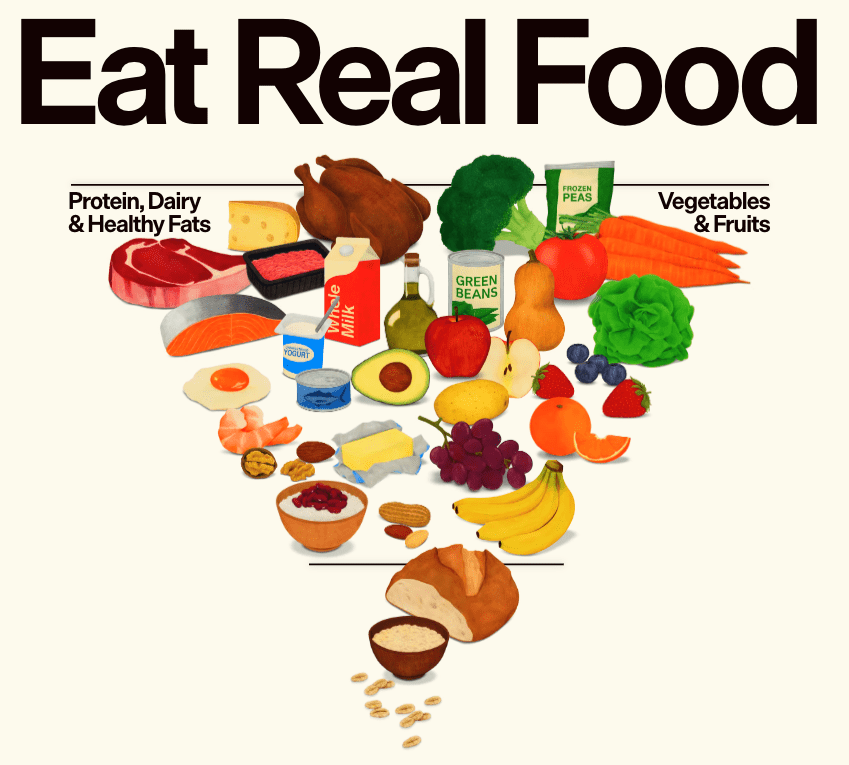
The Return of the Food Pyramid—Now Inverted!
For the first time since 2005, the food pyramid is back—but flipped upside down to reflect new priorities. The old 1992 pyramid had grains at the broad base (eat most) and fats/oils at the tiny tip (eat least). The government’s MyPlate guidelines (2011–2025) shifted to a plate model with grains and veggies taking half the space. The new 2025–2030 pyramid inverts that entirely:
- Broad top (largest section – eat most): Protein (meats, eggs, fish, seafood), full-fat dairy, healthy fats, fruits, and vegetables.
- Narrow bottom (smallest section – eat least): Whole grains and limited starches.
· The clear message: Build your diet around nutrient-dense real foods, not carb-heavy processed items.
I’m thrilled you’re excited about this! Here’s what happened. On January 7, 2026, the U.S. Departments of Health and Human Services (HHS) and U.S. Department of Agriculture (USDA) released the new Dietary Guidelines for Americans, 2025–2030. This marks what officials call the biggest shift in U.S. nutrition policy in generations. Led by HHS Secretary Robert F. Kennedy Jr. and USDA Secretary Brooke Rollins, this update is a cornerstone of the “Make America Healthy Again” (MAHA) initiative, aiming to combat chronic disease by putting real, nutrient-dense whole foods back at the center of American diets.
Gone are the days of heavy emphasis on refined grains and low-fat products. Instead, the guidelines prioritize high-quality protein, full-fat dairy, healthy fats, fruits, and vegetables—while explicitly calling out ultra-processed foods, added sugars, and refined carbs as major culprits in America’s health crisis.
Key Highlights of the New Guidelines
- Eat Real Food: The core message is simple and revolutionary: Focus on whole, minimally processed foods. Avoid “highly processed” items loaded with added sugars, sodium, and industrial seed oils.
- Prioritize Protein: Aim for protein at every meal, from sources like red meat, poultry, eggs, seafood, and plant-based options. Recommended intake is boosted to ~0.54–0.73 grams per pound of body weight daily—nearly doubling previous suggestions for many people.
- Embrace Full-Fat Dairy: Three servings a day, preferably full-fat and without added sugars (think whole milk, cheese, yogurt). This ends decades of “low-fat” dogma.
- Healthy Fats Are Back: Include sources like beef tallow, butter, olive oil, avocados, nuts, and seeds.
- Plenty of Produce: Fruits and vegetables remain essential, but now alongside protein and fats rather than grains dominating.
- Limit Processed Foods and Sugars: This is a strong “declaration of war” on added sugars and ultra-processed items, which are linked to obesity, diabetes, and heart disease.
Why This Matters for Overall Health
This update aligns perfectly with a holistic approach to health—focusing on nourishment that supports energy, muscle maintenance, hormone balance, and disease prevention. By reducing processed junk and boosting satisfying, nutrient-rich foods, it’s designed to help reverse trends in obesity and chronic illness. It’s practical, evidence-based (drawing from updated science on saturated fats and processing), and empowering for everyday eating.
Why This Feels Right for Physical Well-Being
These guidelines empower us to nourish our bodies for strength, vitality, and resilience. By focusing on satisfying real foods, you’ll likely feel fuller, more energized, and less prone to cravings. It’s a return to how humans ate for generations—before processed foods took over. It’s a game-changer for American health.
I encourage you to go online and get the official information:
- Main site: https://realfood.gov (with visuals, fact sheets, and more)
- Full PDF version: https://cdn.realfood.gov/DGA.pdf
Here’s a good way to start:
Simple 7-Day Meal Plan: Real Food Made Easy
These meals follow the inverted pyramid: Protein + healthy fats + produce at every meal, minimal processing. Aim for 2,000–2,500 calories (adjust portions). Shop once, eat deliciously!
Day 1
- Breakfast: Scrambled eggs with cheese, spinach, and avocado
- Lunch: Grilled chicken salad with olive oil dressing, tomatoes, and cucumbers
- Dinner: Steak with buttered broccoli and sweet potato
- Snack: Full-fat Greek yogurt with berries
Day 2
- Breakfast: Full-fat cottage cheese with nuts and apple slices
- Lunch: Tuna salad (in olive oil) wrapped in lettuce leaves
- Dinner: Baked salmon with asparagus and quinoa (small portion)
- Snack: Cheese sticks and carrots
Day 3
- Breakfast: Omelet with bacon, mushrooms, and cheese
- Lunch: Ground beef bowl with rice (limited), peppers, and onions
- Dinner: Roast chicken with Brussels sprouts roasted in tallow
- Snack: Handful of almonds and an orange
Day 4
- Breakfast: Smoothie with full-fat milk, protein powder (or eggs), banana, and spinach
- Lunch: Egg salad with mayo on whole-grain bread (1 slice)
- Dinner: Pork chops with sautéed greens and cauliflower mash
- Snack: Apple with peanut butter
Day 5
- Breakfast: Fried eggs over easy with sausage and tomato
- Lunch: Turkey roll-ups with cheese, avocado, and veggies
- Dinner: Grass-fed burger (no bun) with side salad and fries (baked in beef tallow)
- Snack: Full-fat yogurt parfait with nuts
Day 6
- Breakfast: Chia pudding made with whole milk, topped with berries
- Lunch: Shrimp stir-fry with broccoli, garlic, olive oil (substitute fish for shrimp if desired)
- Dinner: Lamb chops with zucchini and small whole-grain couscous
- Snack: Cottage cheese and pineapple
Day 7
- Breakfast: Bacon, eggs, and sautéed kale (use turkey bacon if desired)
- Lunch: Leftover protein bowl with mixed veggies
- Dinner: Whole roasted fish with lemon butter and green beans
- Snack: Dark chocolate (70%+) and a pear
Tips: Drink water, herbal tea, or black coffee. Season generously with herbs/salt. This plan is flexible—swap proteins, add more veggies!
This is truly exciting—a real step toward healthier lives! Share your favorite meals from the plan in the comments. What’s your first MAHA-inspired lifestyle change?
With love and total commitment to your well-being,
Wendy Stone, PsyD, RN—Doctoral-trained psychotherapist and International educator